
Stress Relief for Busy Professionals: 7 Evidence-Based Techniques That Actually Work 🧘
Stress Relief for Busy Professionals: 7 Evidence-Based Techniques That Actually Work
It’s 3 PM on a Tuesday. Your inbox has 47 unread emails, your boss just added another project to your plate, and you can feel your shoulders creeping up toward your ears. You’re not alone. According to the American Psychological Association’s 2023 Stress in America survey, 28% of working adults report feeling overwhelmed by stress on a daily basis, and 64% say work is a significant source of that stress.
- What’s Really Happening to Your Body When You’re Stressed
- Why Your Current Stress Relief Approach Probably Isn’t Working
- Technique 1: Tactical Breathing (The 4-7-8 Protocol)
- Technique 2: High-Intensity Movement (Not What You Think)
- Technique 3: Sleep Optimization (The Most Overlooked Lever)
- Technique 4: Strategic Social Connection (Not Just Venting)
- Technique 5: Cognitive Reframing (Changing Your Stress Narrative)
- Technique 6: Progressive Muscle Relaxation (PMR)
- Technique 7: Circadian Rhythm Alignment (The Underrated Stress Buster)
- Common Stress Relief Mistakes to Avoid
- Implementation: Your 30-Day Stress Relief Plan
- Frequently Asked Questions
- · Q: How long before I see results?
- · Q: Which technique should I start with if I can only do one?
- · Q: Will these techniques work if my stress is caused by a fundamentally stressful situation (bad job, difficult relationship)?
- · Q: Can I do these techniques if I have anxiety disorder, depression, or PTSD?
- · Q: What if I don’t see improvement after 4 weeks?
- Key Takeaways
- Your Next Step
Here’s the problem: most stress relief advice you’ll find online is generic. ‘Take a bath.’ ‘Breathe deeply.’ ‘Go for a walk.’ These aren’t wrong, but they’re vague. After a decade of helping professionals manage chronic workplace stress, I’ve learned that what actually works is specific, measurable, and fits into the life you actually have—not some fantasy version where you have unlimited free time.
This guide breaks down the science behind stress, shows you exactly why your current coping mechanisms might not be working, and gives you seven concrete techniques with step-by-step instructions you can start using today. Whether you’re in your twenties managing your first high-pressure role or a seasoned executive juggling multiple teams, you’ll find actionable strategies backed by peer-reviewed research.
🎯 What’s Really Happening to Your Body When You’re Stressed
Before diving into solutions, it helps to understand what stress actually does at a physiological level. When you perceive a threat—whether that’s a looming deadline or a critical email from leadership—your amygdala (the brain’s threat-detection center) triggers your sympathetic nervous system. This is your fight-or-flight response.
Your body releases cortisol and adrenaline within seconds. Your heart rate increases, blood pressure rises, and glucose floods your bloodstream. This system evolved to help you outrun a predator, not to manage 200 emails a day. The problem: in modern work environments, you can’t actually fight or flee. Instead, you sit at your desk in a state of physiological activation that your body was never designed to maintain for hours.
According to research published in the Journal of Occupational Health Psychology, chronic activation of this stress response leads to:
- Weakened immune function (you get sick 33% more often when stressed)
- Impaired decision-making and reduced creativity
- Sleep disruption that compounds the problem night after night
- Increased inflammation linked to cardiovascular disease
- Difficulty concentrating, which creates more stress
The cascade is vicious. You’re stressed, so you sleep poorly. Poor sleep makes you more emotionally reactive, so you get stressed more easily. More stress makes sleep worse. After three weeks of this cycle, your baseline stress level has permanently elevated.
What’s encouraging: this cycle is completely reversible. It takes time, but research shows that consistent stress management practices can lower cortisol levels by 25% within 6 weeks, and some people see improvements within 10-14 days of starting.
🔍 Why Your Current Stress Relief Approach Probably Isn’t Working
Before I share what works, let’s talk about what doesn’t—or rather, what works poorly when implemented the way most people do it.
Random relaxation attempts: You wait until you’re at a breaking point, then try to ‘relax.’ Your nervous system is revved to 9 out of 10, and you’re expecting meditation or deep breathing to bring you to 3. That’s like trying to stop a car by gently tapping the brakes when you’re already in a skid. It won’t work effectively. Stress relief needs to be consistent and preventative, not just reactive.
One-size-fits-all solutions: Someone tells you yoga will fix everything, but you hate yoga. You force yourself to go to three classes, hate it more, and then feel bad for ‘failing’ at stress relief. Stress management is individual. What calms one person’s nervous system might activate another’s.
Expecting instant results: You try meditation for five minutes and feel no different. Your brain’s stress habituation patterns took months or years to develop. They won’t shift in a week. Research in Neuropsychology shows that consistent meditation practice requires 8-12 weeks before significant changes in baseline anxiety appear.
Confusing avoidance with relief: Scrolling social media, drinking alcohol, or binge-watching shows feels like stress relief in the moment, but it’s actually avoidance. Your nervous system stays activated. You might feel temporarily distracted, but you’re not actually down-regulating your stress response. These habits also often create secondary stress (guilt, lost sleep, declined productivity).
The good news: if you understand these patterns, you can avoid them. The techniques I’m about to share work because they address the root physiological problem—an overactive stress response—rather than just distracting you from stress temporarily.
💪 Technique 1: Tactical Breathing (The 4-7-8 Protocol)
Let’s start with the simplest, most immediately effective tool: breathing. Your autonomic nervous system—the one running in the background controlling your stress response—has one conscious control point: your breath. Everything else (heart rate, digestion, blood vessel dilation) happens automatically, except breathing can be both automatic and conscious.
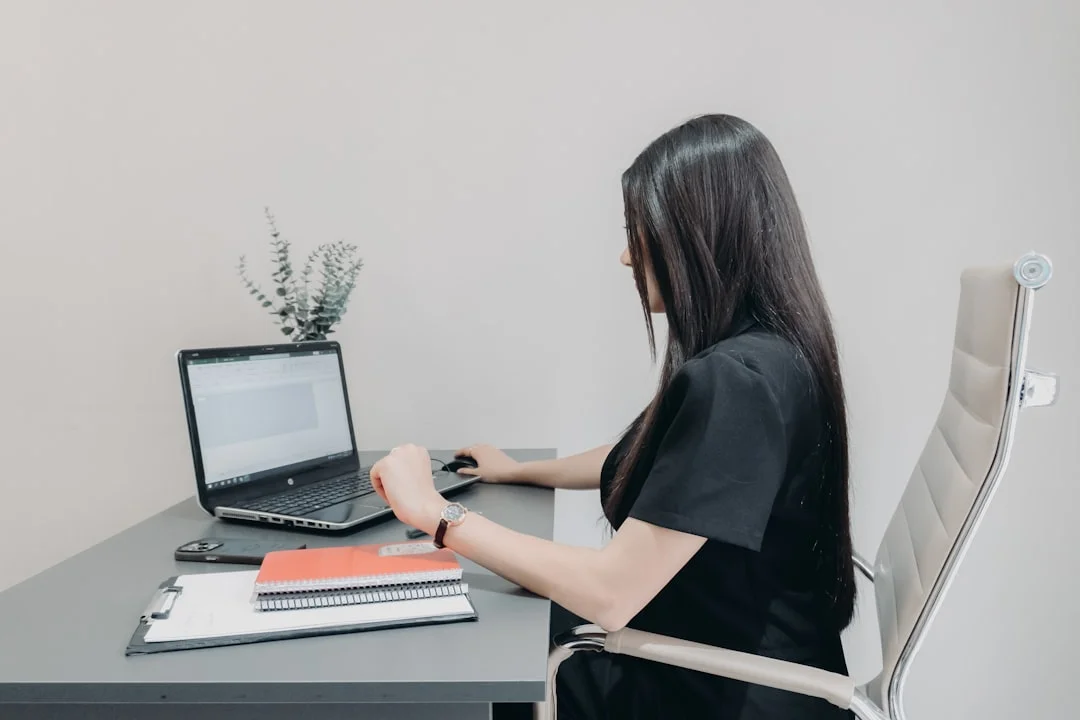
When you’re stressed, you naturally shift to shallow, rapid chest breathing. This actually reinforces the stress response. By controlling your breath pattern, you can directly signal to your nervous system that there’s no threat. Research published in Frontiers in Psychiatry shows that deliberate slow breathing activates the parasympathetic nervous system within 90 seconds, measurably lowering cortisol and heart rate.
The 4-7-8 Protocol (from Dr. Andrew Weil):
- Exhale completely through your mouth with a whoosh sound
- Close your mouth and inhale through your nose for a count of 4
- Hold your breath for a count of 7
- Exhale through your mouth for a count of 8
- Repeat for 4 complete cycles
That’s it. Two minutes total. Do this the moment you feel stress building—before the meeting, after reading that email, when you notice your shoulders are tense. The hold-and-slow-exhale pattern is key. You’re extending the exhale relative to the inhale, which specifically activates your parasympathetic system.
Why this works better than ‘just relax’: It’s specific (exact counts), it’s quick (fits in a workday), and it triggers a measurable physiological shift. You’re not hoping relaxation happens; you’re using a concrete technique that reliably activates your parasympathetic system.
🏃 Technique 2: High-Intensity Movement (Not What You Think)
Most stress relief advice recommends gentle exercise: yoga, walking, light stretching. These are good, but they’re incomplete. Remember: stress is a physical response designed to prepare your body for action. Your muscles are tense, your body is flooded with adrenaline and cortisol, and you’re ready to move.
When you don’t actually move—when you sit at your desk managing the stress response—the nervous system’s activation has nowhere to go. It stays elevated.
Research in the Journal of Affective Disorders found that just 20 minutes of high-intensity exercise (anything that gets you breathless) reduces anxiety and stress hormones more effectively than gentle exercise. The key is ‘intense’ relative to your fitness level, not absolute intensity. For a desk worker, a 20-minute jog might be high-intensity. For an athlete, it might be sprints.
The protocol:
- Do this 3-5 times weekly
- Each session: 20 minutes minimum, with at least 5 minutes at high intensity (where you can’t hold a conversation)
- Best timing: late morning or early afternoon, not after 7 PM (it can disrupt sleep)
- The activity matters less than the intensity: running, cycling, rowing, jumping rope, even vigorous walking uphill works
What happens: high-intensity exercise burns off the stress hormones that were meant to fuel that fight-or-flight response. Your body completes the cycle it was designed for. Within 30 minutes post-exercise, cortisol and adrenaline return to baseline. Plus, consistent exercise increases baseline serotonin and GABA (your brain’s natural calming neurotransmitter), making you less reactive to stress overall.
One caveat: if you’re severely stressed or burned out, intense exercise without recovery days can backfire. More on that below.
🛌 Technique 3: Sleep Optimization (The Most Overlooked Lever)
Sleep is where your nervous system resets. It’s not a luxury; it’s the foundation of stress resilience. Here’s what most people get wrong: they think sleep is about quantity only (‘I need 8 hours’). Quality matters as much or more.
When you’re stressed, your sleep becomes fragmented. You might get 7 hours in bed but wake four times, disrupting deep and REM sleep. Research in Sleep shows that fragmented sleep of 7 hours provides fewer restorative benefits than consolidated 6 hours without interruption.
Additionally, stress suppresses melatonin and increases evening cortisol. You get to bed later, sleep lighter, and wake earlier. The cycle worsens stress.
Three high-impact sleep interventions:

1. Consistent sleep timing: Go to bed and wake at the same time every day (within 30 minutes), even weekends. This regulates your circadian rhythm, improving both sleep depth and daytime stress resilience. After 2 weeks of consistent timing, most people notice measurably better mood and lower daytime anxiety.
2. Evening light control: Dim overhead lights 2 hours before bed. Wear blue-light-blocking glasses if using screens in evening. Bright light in the evening suppresses melatonin production and keeps cortisol elevated. This single change improves sleep latency (time to fall asleep) by an average of 18 minutes within a week.
3. Temperature optimization: Your core body temperature needs to drop 2-3 degrees to initiate sleep. Keep your bedroom at 65-68°F (18-20°C). If that’s not possible, take a hot shower 90 minutes before bed—the subsequent drop in body temperature triggers sleep onset. This is more effective than any supplement and works within 5 days.
Avoid: Caffeine after 2 PM (caffeine’s half-life is 5 hours; a 3 PM coffee is still 50% active at 8 PM). Alcohol as a sleep aid (it fragments sleep architecture). Screens within 1 hour of bed (the stimulation keeps your nervous system activated).
📱 Technique 4: Strategic Social Connection (Not Just Venting)
Humans are social mammals. Isolation chronically elevates stress and cortisol. Social connection—the right kind—activates your parasympathetic nervous system. A 2015 study in PLOS ONE found that just 10 minutes of meaningful conversation reduced cortisol by 23%.
But here’s the crucial distinction: venting about stress with someone equally stressed doesn’t help. It’s reciprocal activation. You both end up more stressed. What works is connection with someone who’s calm and present.
The protocol:
- Schedule one 10-15 minute conversation weekly with someone you trust who’s generally calm (not someone who amplifies stress)
- During that time, don’t focus on problems; focus on non-stressful shared experiences or interests
- Make it in-person if possible (phone second-best, text third-best for nervous system regulation)
- Build a ‘stress buddy’ relationship: someone you can talk to when stressed, who listens without judgment
Secondary benefit: social support increases resilience to future stress. People with strong social connections are 50% less likely to experience stress-related health problems, according to research in Psychological Science.
🧠 Technique 5: Cognitive Reframing (Changing Your Stress Narrative)
Your thoughts generate stress as much as external events do. In fact, often more so. Two people face the same deadline. One thinks, ‘This is impossible; I’m going to fail,’ and experiences severe stress. The other thinks, ‘This is challenging; I’ll figure it out,’ and experiences manageable stress. Same event, different appraisals, dramatically different stress responses.
This isn’t positive thinking (‘just think happy thoughts’). It’s realistic appraisal based on actual evidence. Cognitive reframing is from cognitive behavioral therapy (CBT), which has extensive clinical evidence supporting it.
The process (takes 3-5 minutes when you notice stress rising):
- Identify the thought: Write down the stress-generating thought: ‘I can’t handle this project. Everyone will think I’m incompetent.’
- Examine the evidence: What evidence supports this thought? What contradicts it? (You’ve completed complex projects before. Your last review was positive.)
- Identify the cognitive distortion: Is this catastrophizing (assuming the worst outcome)? Overgeneralization (one problem means you always fail)? Black-and-white thinking?
- Generate a realistic alternative: Not ‘I’m amazing, this will be easy,’ but: ‘This project is complex, but I’ve tackled complex projects before. I might struggle at some points; that’s normal. I can ask for help if needed.’
- Notice the shift: This realistic thought generates lower stress because it’s both accurate and less catastrophic.
Research in Cognitive Therapy and Research shows that people who practice cognitive reframing for 4 weeks reduce anxiety scores by an average of 31%, and the benefits persist over time.
This is worth practicing before you’re in crisis. Use a simple app like Daylio or Stoic to log stressful thoughts and practice reframing during low-stress moments. Then, when genuine stress hits, you’ll have the skill ready.
💆 Technique 6: Progressive Muscle Relaxation (PMR)
Stress lives in your muscles. When you’re chronically stressed, certain muscles stay partially contracted (neck, shoulders, jaw, lower back). You adapt to this new baseline and don’t realize you’re tense until something draws your attention to it.

Progressive muscle relaxation resets this baseline. You systematically tense and release each muscle group, training your nervous system to recognize the difference between tension and relaxation, and teaching your muscles to fully release.
The protocol (15 minutes, can be done anytime):
- Sit or lie down in a quiet space
- Starting with your toes, tense the muscle group for 5 seconds
- Release and notice the sensation of relaxation for 10 seconds
- Move up your body: calves, thighs, glutes, abdomen, chest, back, shoulders, arms, hands, neck, face
- Complete one full cycle
Do this 3-4 times weekly. Research in the Journal of Clinical Psychology shows that consistent PMR practice reduces anxiety by 25-30% within 4 weeks and increases interoception (awareness of your body’s internal state), helping you catch stress earlier.
🎯 Technique 7: Circadian Rhythm Alignment (The Underrated Stress Buster)
Your body runs on a 24-hour cycle called your circadian rhythm. It regulates cortisol (peaks in early morning, should decline through the day), melatonin (rises in evening), body temperature, and dozens of other systems. When your rhythm is misaligned—due to irregular sleep, light exposure, or meal timing—your baseline stress hormone levels increase.
Someone with misaligned circadian rhythm might have consistently elevated evening cortisol. This makes sleep worse, which keeps cortisol elevated. The cycle persists.
The protocol (takes 2-3 weeks to shift):
- Morning light: Get 15-30 minutes of bright light within 1 hour of waking. This sets your circadian rhythm forward. Your cortisol peak happens naturally in early morning; bright light reinforces this. Go outside or use a 10,000-lux light box.
- Meal timing: Eat your first meal within 1-2 hours of waking. This reinforces the morning time-setting signal. Your liver’s circadian rhythm responds to eating patterns.
- Exercise timing: Morning or early afternoon exercise has stronger circadian effects than evening exercise. Try to consistently exercise at the same time daily.
- Evening darkness: As described above, dim lights and avoid screens in the evening.
The compounding effect: after 2-3 weeks of consistent circadian alignment, your cortisol rhythm becomes more pronounced (higher in morning, lower in evening), your sleep improves, your mood stabilizes, and you’re less reactive to stress. It’s like resetting your baseline.
⚠️ Common Stress Relief Mistakes to Avoid
Mistake 1: Using stress relief as permission to keep stress-generating behaviors
You implement breathing exercises and exercise but don’t change the actual source of stress (bad job fit, poor boundaries, unmanaged workload, toxic relationships). Stress relief techniques become band-aids on a wound that keeps opening. Do the techniques, but also address the source. Sometimes that means having a difficult conversation with your boss, setting boundaries, or even changing jobs. The techniques buy you capacity to make those changes.
Mistake 2: Waiting until you’re burned out
Chronic stress is progressive. Acute stress → chronic stress → burnout. Burnout is when your nervous system has been activated so long that it’s now dysfunctional even at rest. You feel exhausted even after sleep, you’re cynical, nothing feels rewarding. It takes months to recover from burnout. Starting stress relief practices when you first notice chronic stress (weeks 2-3) takes days or weeks to be effective. Starting at burnout takes months. Don’t wait.
Mistake 3: Doing too much too soon
You read this and decide you’re going to do all seven techniques plus meditation plus yoga plus a new diet. You start with extreme enthusiasm, burn out on the practices themselves, and quit after 10 days. Start with one or two practices you can sustain consistently. Consistency over intensity. One technique done daily is more effective than all seven techniques done sporadically.
Mistake 4: Expecting stress to disappear entirely

Stress isn’t the enemy; unmanaged stress is. Some stress is appropriate (alertness before a presentation, motivation to complete important work). The goal isn’t zero stress; it’s stress resilience—the ability to activate your stress system when needed and down-regulate it when the demand passes. These techniques build that capacity.
Mistake 5: Ignoring sleep while addressing stress
All other interventions are significantly less effective if you’re chronically sleep-deprived. Sleep is the foundation. If you could only focus on one thing, make it sleep. Everything else is more effective when you’re sleeping well.
📊 Implementation: Your 30-Day Stress Relief Plan
Here’s how to integrate these techniques without getting overwhelmed:
| Week 1 | Focus: Sleep optimization + 4-7-8 breathing. Implement consistent sleep timing and evening light control. Do the breathing exercise once daily in the morning. |
| Week 2 | Add: High-intensity exercise 3x weekly. Continue sleep and breathing practices. Morning light exposure (15 minutes within 1 hour of waking). |
| Week 3 | Add: Progressive muscle relaxation once weekly. Begin noticing stress-generating thoughts; practice cognitive reframing with 2-3 situations. |
| Week 4 | Consolidate all practices. Schedule one meaningful social connection if you haven’t already. Assess progress: are you sleeping better? Less reactive? Able to handle stress more easily? |
Daily checklist (after week 1):
- ☐ Sleep at consistent time (same ±30 min)
- ☐ Wake at consistent time
- ☐ 15-30 min bright light within 1 hour of waking
- ☐ 4-7-8 breathing (2 min)
- ☐ Dim lights/no screens 2 hours before bed
3x weekly:
- ☐ High-intensity exercise (20 min)
- ☐ Progressive muscle relaxation (15 min)
When stressed:
- ☐ Use 4-7-8 breathing immediately
- ☐ Notice and reframe catastrophic thoughts
❓ Frequently Asked Questions
Q: How long before I see results?
A: This depends on the technique and severity of stress. Sleep optimization often shows results within 3-5 days (better mood, more energy). High-intensity exercise delivers anxiety relief within 30 minutes of a single session, though consistent benefits require 3-4 weeks. Cognitive reframing shows measurable anxiety reduction after 4 weeks of practice. Circadian rhythm alignment typically requires 2-3 weeks. Overall stress resilience and a noticeable shift in how you handle stress generally appears between week 3-6 of consistent practice. Some people feel different within days; others need 4-6 weeks. Consistency matters more than time frame—the techniques work, but they require sustained practice.
Q: Which technique should I start with if I can only do one?
A: Start with sleep optimization, specifically consistent sleep timing and evening light control. Sleep is the foundation of all other stress regulation. Improve your sleep first, and everything else becomes easier. Within a week of consistent sleep timing, you’ll have more mental resources to address the other techniques. If you’re severely anxious and need faster relief, start with high-intensity exercise instead; the anxiety reduction happens within a single session. But sleep is the lever with the longest-lasting impact.
Q: Will these techniques work if my stress is caused by a fundamentally stressful situation (bad job, difficult relationship)?
A: Yes and no. These techniques absolutely reduce your physiological stress response, meaning you’ll be less reactive, sleep better, and have more capacity. But if the source of stress is objectively problematic (a truly toxic job, an abusive relationship, an untenable workload), stress relief techniques will manage the symptoms, not solve the problem. Think of it this way: if your hand is on a hot stove, stress relief techniques help you tolerate the pain better. Actually moving your hand off the stove is the real solution. Use these techniques to build the emotional capacity and clear thinking you need to make difficult decisions about your situation. Sometimes that means negotiating boundaries at work, sometimes it means finding a new job, sometimes it means ending a relationship. The techniques help you do that from a place of clarity rather than desperation.
Q: Can I do these techniques if I have anxiety disorder, depression, or PTSD?
A: These techniques are helpful as complements to professional treatment (therapy, medication) but shouldn’t replace it. Some techniques like PMR might initially intensify symptoms in PTSD (the body awareness focus can trigger memories). Cognitive reframing is core to CBT, which is clinically proven for anxiety and depression—but it should be done with professional guidance initially. If you have a diagnosed condition, discuss these techniques with your therapist or psychiatrist before starting. They can guide which ones are appropriate for you and in what sequence. The goal is complementary treatment: professional help for the condition itself, plus lifestyle practices that support recovery.
Q: What if I don’t see improvement after 4 weeks?
A: First, ensure you’re truly doing the practices consistently, not just sporadically. Research on habit formation shows it takes 66 days on average for a behavior to feel automatic. Week 4 is early. Second, assess whether you’re addressing the source of stress or just managing symptoms. If your stress comes from a problematic situation you haven’t changed, the techniques alone won’t create dramatic improvement. Third, consider whether you’ve done one or more of the techniques, not trying to do all of them. If you’ve genuinely been consistent for 4 weeks and see no improvement, and there’s no obvious ongoing stressor, talk to your doctor. Sometimes stress symptoms indicate an underlying medical condition (thyroid dysfunction, sleep apnea, nutritional deficiency) that should be addressed. You might also benefit from working with a therapist or stress management coach to identify personalized approaches.
🎯 Key Takeaways
- Stress relief requires consistent, specific practices—not vague self-care. The seven techniques in this guide (breathing, exercise, sleep, connection, cognitive reframing, PMR, circadian alignment) have peer-reviewed evidence showing measurable reduction in stress and anxiety within 3-6 weeks of consistent practice.
- Sleep is the foundation. Prioritize consistent sleep timing and quality before adding other techniques. Better sleep makes everything else more effective and easier to sustain.
- Start with one or two practices, not all seven. Consistency with one technique beats inconsistency with many. Add additional practices after the first one feels habitual (usually 3-4 weeks).
Your Next Step
You now have seven evidence-based stress relief techniques with specific implementation instructions. Pick one—most likely sleep optimization or the 4-7-8 breathing—and commit to it for the next week. Not someday. This week. Tomorrow morning, set a consistent wake time. This evening, dim your lights 2 hours before bed. Use the 4-7-8 breathing when you notice stress tomorrow.
That’s not a suggestion to ‘try soon’; that’s actually starting. The research is clear: stress resilience builds through consistent practice, not knowledge alone. You now have the knowledge. The next step is the practice.
After one week, you’ll have measurable data about whether these techniques work for you. Sleep quality will be noticeably different. Stress responsiveness will be slightly lower. That’s when you add the second technique. Progress compounds.
You don’t need to overhaul your entire life or spend hours daily on stress management. Twenty minutes of daily sleep investment, 20 minutes of weekly exercise, and 2 minutes of breathing daily creates measurable, sustained improvement in your stress resilience and quality of life. That’s genuinely attainable, and it genuinely works.